
 |
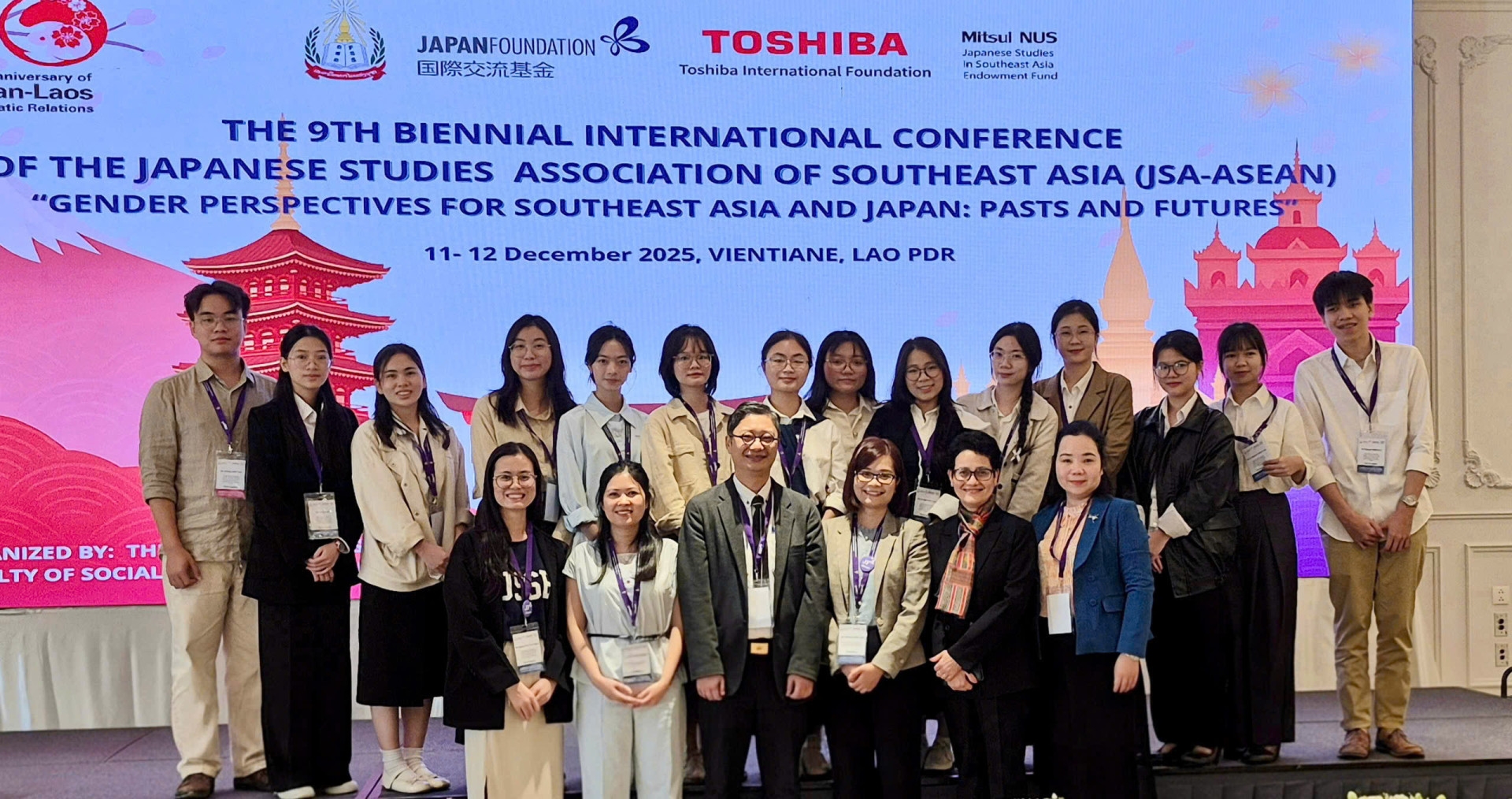
The workshop was held as part of JSA's biennial academic activities, with the 9th edition revolving around the theme "Gender Perspectives for Southeast Asia and Japan".
The JSA International Conference is a prestigious academic forum bringing together researchers, lecturers, and scholars from many countries and regions around the world. Through in-depth academic activities, the conference aims to promote interdisciplinary dialogue, broaden research perspectives on contemporary social issues, and strengthen academic connections between Japan and Southeast Asian countries in the context of globalization. Japanese Studies students attending this conference, in addition to enhancing their professional knowledge, will also have the opportunity to learn and develop personal skills such as critical thinking, academic exchange, international communication, and the ability to approach research issues from diverse perspectives.
Prior to the official conference, on December 9-10, 2025, the group of Japanese Studies students had the opportunity to participate in practical activities in Vientiane. Through visiting several typical landmarks of the Lao capital and exploring the local life at the Vientiane night market, the students gained a better understanding of the life, culture, and people of Laos, thereby creating a favorable foundation for academic exchange and interaction during the subsequent conference days.
The conference officially took place over two days, December 11th and 12th, 2025, with a well-structured and scientific program. The opening ceremony was held in a formal setting with opening remarks and keynote speeches by prestigious scholars. In addition, the opening program included a traditional Japanese sake barrel-opening ceremony (Kagami Biraki) combined with a performance of the unique Khaen musical instrument by Laotian women, contributing to an academic atmosphere rich in the host country's cultural identity.
Following the opening session, the conference continued with several parallel thematic discussion sessions. The presentations and discussions focused on diverse topics such as: gender issues and shifts in gender structures; migration in Asian countries; women and labor; soft power and cultural diplomacy; religion, cuisine, and folklore; digital culture and transnational communities; agriculture and food security; media, film, and popular culture; social movements and political ideology; history and war memory; education, language exchange, and community cohesion. Presentations by scholars from various countries offered multifaceted and interdisciplinary perspectives. The JSA 2025 conference not only focused on the study of Japan as an independent subject but also emphasized an approach to Japan in its interaction with the ASEAN region. Through interdisciplinary discussions, the workshop highlighted Southeast Asia's role as a crucial academic dialogue space, where issues of gender, society, culture, and development were examined in a comparative context between Japan and ASEAN countries.
 |
Within the framework of the conference, a dinner party featuring traditional costumes from various countries was held, fostering interaction and connection among the participating delegations. The program was particularly memorable with the Lam Vong dance from Laos. After the performance, delegates from the host country directly introduced and guided the attendees, encouraging them to join in the dance, creating a joyful, cohesive, and emotional atmosphere. Amidst the elegant and warm ambiance of the party, the Vietnamese students, dressed in traditional ao dai, proudly sang "Vietnam ơi" (Oh Vietnam!), leaving a lasting impression on their international friends and contributing to the dissemination of Vietnamese culture to the international academic community.


